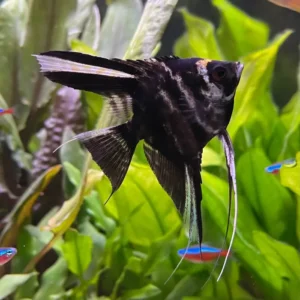
Assorted Angelfish 3–5cm are juvenile Pterophyllum scalare offered in a mixed selection of colours and patterns. At this size, these assorted angelfish are still growing and developing their adult shape, finnage and markings, making them a great choice if you enjoy watching your fish mature over time.
These juvenile angelfish are suitable for peaceful community aquariums with compatible tank mates and stable water conditions. As they grow, they become elegant, tall‑bodied freshwater angelfish that make a striking centrepiece in planted and display tanks.
Key Features of Assorted Angelfish 3–5cm
-
Mixed colours and patterns
A selection of assorted colour angelfish, with a variety of markings that become more defined as they grow.
-
Juvenile size (3–5cm)
Sold at approximately 3–5cm, ideal for growing out and letting you choose your favourites as they mature.
-
Great for community tanks
Suitable for peaceful community setups with appropriately sized, non‑fin‑nipping tank mates.
-
Classic Pterophyllum scalare
The most popular freshwater angelfish species, known for its tall body shape and graceful swimming.
Basic Care for Assorted Angelfish
-
Tank size:
Start with at least 90L+ for a small group of Assorted Angelfish 3–5cm, with more volume as they grow.
-
Water parameters (general guide):
- Temperature: around 24–28°C
- pH: roughly 6.5–7.5
- Soft to medium hardness is usually preferred
-
Diet:
Assorted angelfish are not fussy eaters. Offer a varied diet of quality pellets or flakes, plus frozen or live foods such as brine shrimp, bloodworms and daphnia to support growth and colour.
-
Temperament:
Generally peaceful, but like all Pterophyllum scalare, they can become territorial as they pair up or when breeding. Avoid housing them with very small fish that may be seen as food, or with aggressive fin‑nippers.
Notes on Buying Assorted Angelfish 3–5cm
Because these are assorted angelfish, individual colours and patterns will vary from fish to fish. At the 3–5cm juvenile stage, some markings may still be developing, so you can expect their appearance to continue to change as they grow into adults.